
How to start your care journey
and Make your late life comfortable?
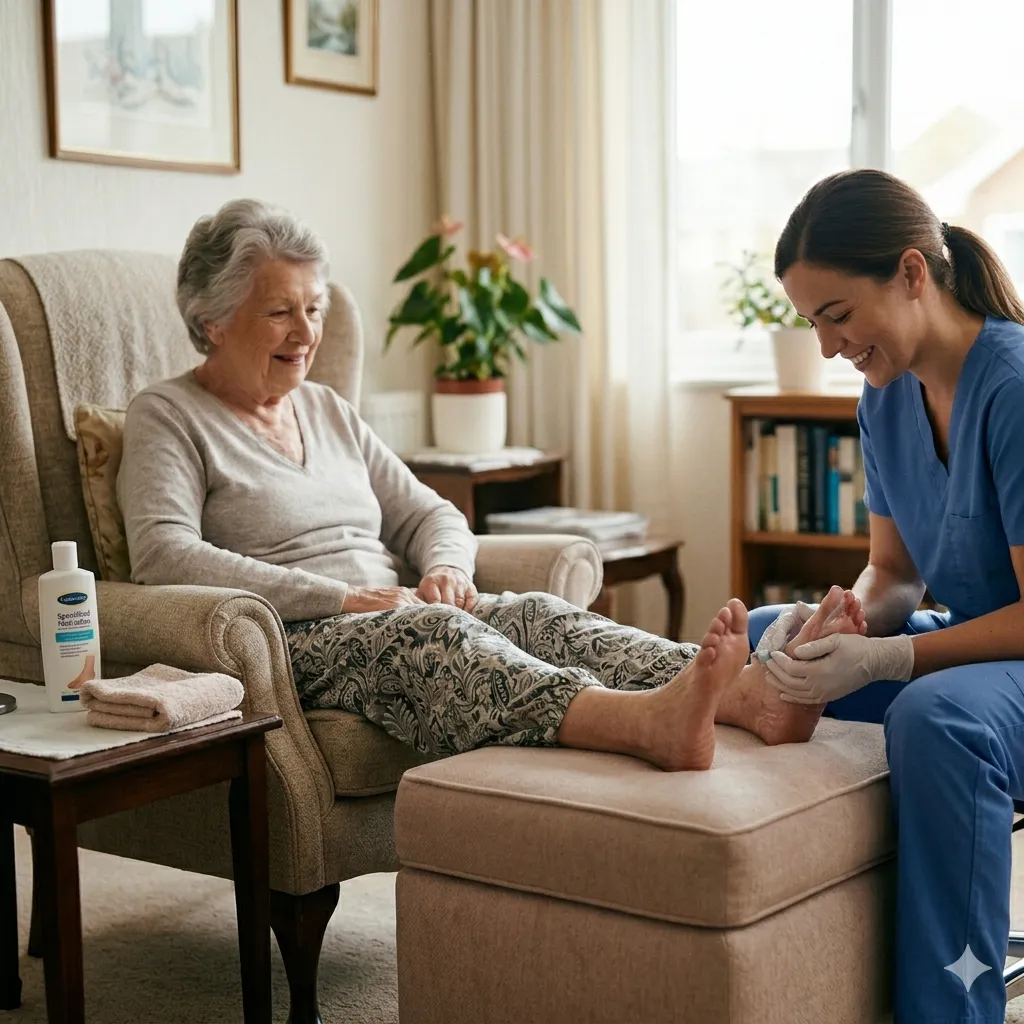
Your Feet Indicates You Health
The Foundation of Healthy Aging Starts Underfoot
Why foot care is one of the most overlooked — and most critical — aspects of senior health, independence, and quality of life.
77%. of adults over 65 experience foot pain
3×. higher fall risk with untreated foot problems
#1. leading cause of senior loss of independence
Why aging changes everything below the ankle
As we age, the fat pads that cushion the soles of our feet gradually thin. Skin becomes drier and more fragile. Toenails grow thicker and harder to trim. Circulation diminishes, slowing the body's ability to heal cuts and wounds. Nerve sensitivity declines — a dangerous change, because seniors may not feel developing sores or injuries until they become serious infections.
Conditions like diabetes and arthritis — common in older adults — compound these changes dramatically. Diabetic neuropathy can eliminate sensation in the feet entirely, while reduced blood flow turns a small blister into a wound that may threaten a limb.
"The feet are the mirror of overall health. When foot health deteriorates, the entire body's mobility and well-being often follow."
The fall connection — a life or death issue
Falls are the leading cause of fatal and non-fatal injuries among adults over 65. Foot pain, poor footwear, and conditions like bunions or hammertoes directly alter gait and balance — dramatically increasing fall risk. A senior who shuffles to avoid foot pain, or who wears loose slippers for comfort, is quietly building toward a potential catastrophe.
Maintaining good foot health keeps seniors walking with confidence and proper posture — one of the most effective fall prevention strategies available.
Daily care: a practical guide
Check feet every day for redness, cuts, blisters, swelling, or sores. Use a mirror or ask for help to see the soles.
Wash with mild soap in warm (not hot) water. Dry thoroughly, especially between toes, where fungal infections thrive.
Apply lotion to heels and soles daily to prevent cracking. Avoid applying between toes — moisture there invites fungus.
Trim toenails straight across, never curved. File sharp edges. If nails are too thick, see a podiatrist.
Wear well-fitting shoes with good arch support and a non-slip sole. Avoid bare feet, even indoors.
Gentle exercise improves circulation. Ankle rotations, toe stretches, and short walks keep foot muscles and joints healthy.
When to see a podiatrist
Seek professional care for: persistent pain, wounds that won't heal, numbness or tingling, ingrown nails, nail fungus, bunions, swelling, or any foot change in someone with diabetes. Do not attempt to cut corns or calluses at home.
The independence at stake
Mobility is dignity. The ability to walk to the kitchen, garden, visit friends, or simply move through one's own home without pain is central to an older adult's sense of self and independence. Foot problems quietly erode this freedom — often long before anyone connects the pain underfoot to the withdrawal from life that follows.
For caregivers and family members, making foot care a regular part of a senior loved one's routine is one of the highest-impact, lowest-cost health interventions available. A twice-yearly podiatrist visit, daily moisturizing, and well-fitting shoes can preserve years of active, independent living.
Here's a comprehensive editorial piece on senior foot care, covering the key dimensions of why it matters so deeply.
Our feet carry us through a lifetime — over 100,000 miles for most people by the time they reach their seventies. Yet foot health is routinely neglected, especially among older adults. This oversight carries profound consequences. Foot problems in seniors are not merely painful inconveniences; they are gateways to immobility, social isolation, and life-threatening falls.
Physiological changes — aging thins the fat pads in the feet, dries the skin, thickens nails, and reduces both circulation and nerve sensitivity. These changes compound each other and are made worse by conditions like diabetes and arthritis.
Fall prevention — foot pain and poor footwear directly alter how seniors walk and balance, and falls remain the leading cause of fatal injuries in people over 65. Treating foot problems is one of the most effective fall-prevention measures there is.
Independence and quality of life — mobility is dignity. Foot problems quietly pull seniors away from daily activities and social engagement long before anyone connects the dots.
Practical daily care — inspection, washing, moisturizing, nail trimming, proper footwear, and gentle movement are all simple habits with outsized impact.
The bottom line: foot care for seniors isn't a luxury or a cosmetic concern — it's a genuine pillar of healthy aging.

Caring for aging parents comes with questions, emotions, and
decisions that don’t always have clear answers.
Our blog is to walk with you — step by step.
Subscribe to our Mailing List