🇨🇦 Government Support for Caregivers
🧑⚕️ 1. Employment Insurance (EI) Caregiving Benefits
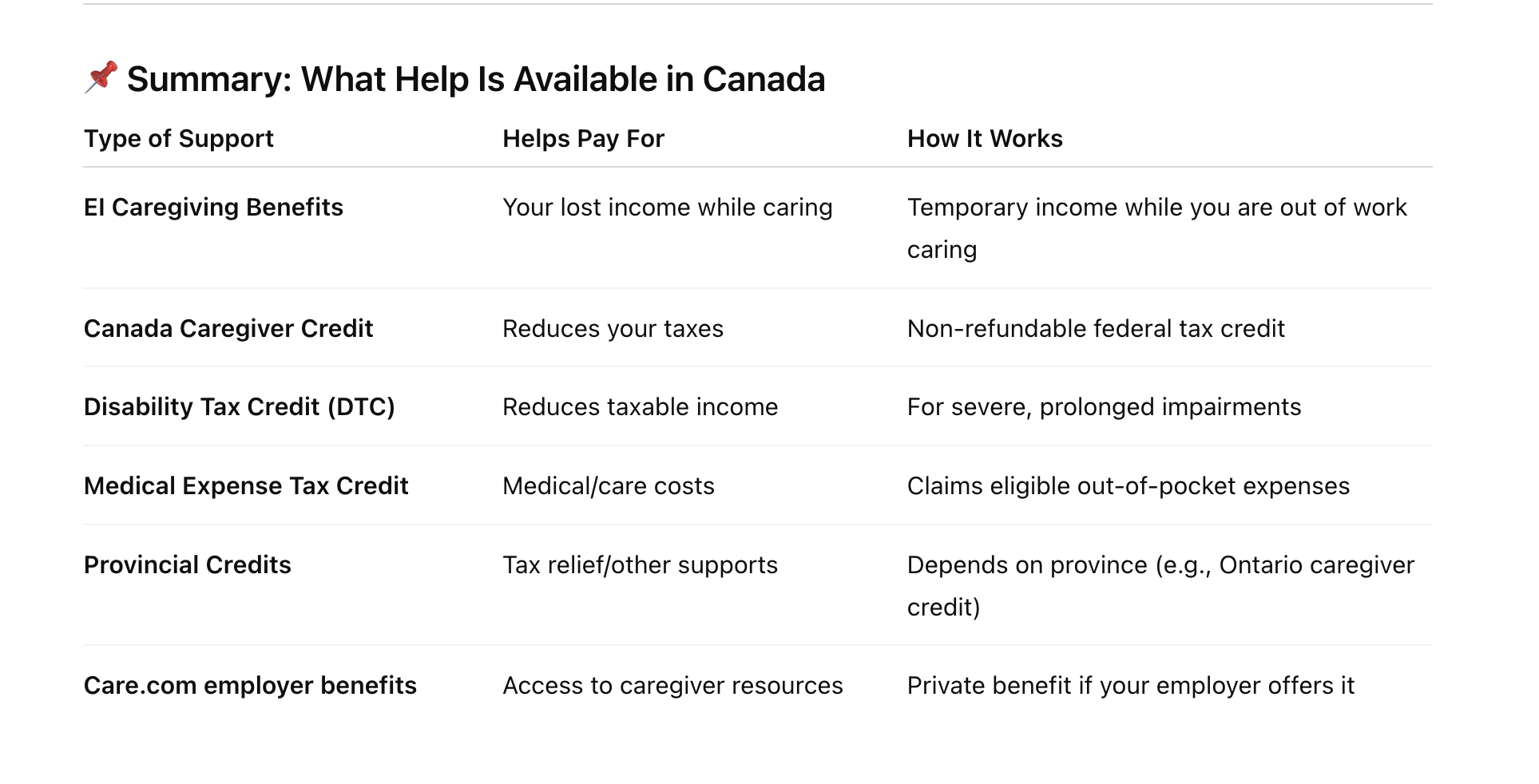
If you need time off work to provide care for a critically ill child, adult, or someone at end-of-life, you may qualify for EI caregiving benefits, which provide temporary income support:
Family caregiver benefit for children: up to ~35 weeks
Family caregiver benefit for adults: up to ~15 weeks
Compassionate care benefits: up to ~26 weeks for end-of-life care
You don’t need to live with the person you’re caring for, but their condition must be medically certified. (Canada)
👉 These benefits replace part of your income while you’re caregiving — they don’t directly “pay” a caregiver, but they help you afford to take time off work to provide care.
💸 2. Tax Credits That Help Offset Care Costs
These reduce how much tax you owe — not direct cash payments — but they can help offset financial pressures of caregiving.
📌 Canada Caregiver Credit (Federal)
A non-refundable tax credit if you support a spouse/common-law partner or dependent with a physical or mental impairment, including children, parents, grandparents, siblings, etc. (Canada)
Helps reduce your federal tax owed based on your care role
Amount varies based on relationship and dependent income
Not refundable (only reduces tax owed)
📌 Disability Tax Credit (DTC)
If the person you’re caring for has a severe and prolonged impairment, they may qualify for this credit, which lowers taxable income and can make other benefits easier to claim. (Canada)
📌 Medical Expense Tax Credit
You can claim eligible medical expenses (including certain home care services or supplies) on your tax return for yourself or dependents. (Canada)
🏙️ 3. Provincial/Territorial Credits and Programs
In addition to federal supports, many provinces offer their own caregiver credits or benefits. Ontario, for example, has:
Ontario Caregiver Tax Credit (OCTC) — additional non-refundable credit for caregivers of adult dependants with infirmity
Respite and support programs — may include short-term relief or local services
Other provinces (BC, Quebec, Manitoba, etc.) have tax credits or caregiver supports that vary in eligibility and amount. (Canadian Seniors Directory)
🏡 4. Other Financial Supports
While not direct “caregiver pay” programs, these can help reduce your expenses:
Child and family benefits (e.g., Canada Child Benefit for kids under 18) — supports families financially with monthly payments. (Canada)
Home Accessibility Tax Credit — can help with modifications to make a home safer for a dependent (e.g., ramps, grab bars) — indirectly assists caregivers’ costs. (nbc.ca)